



Features:
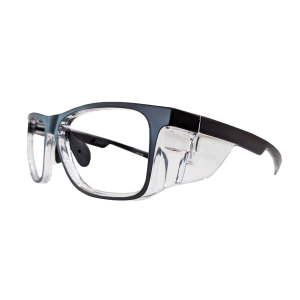
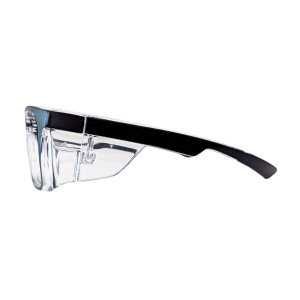
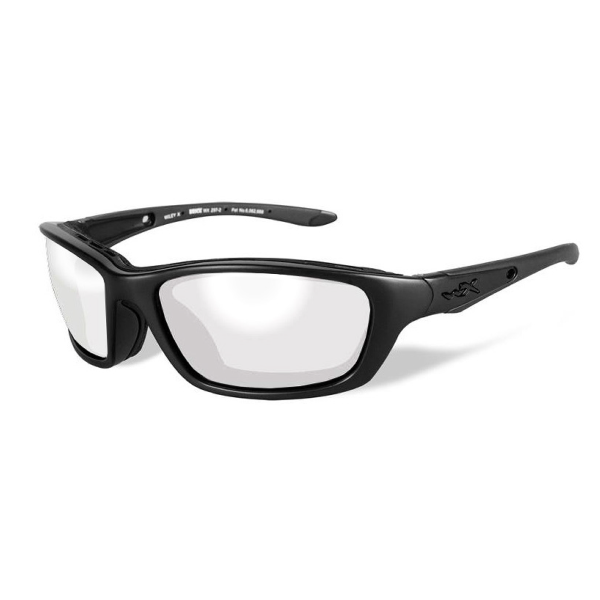
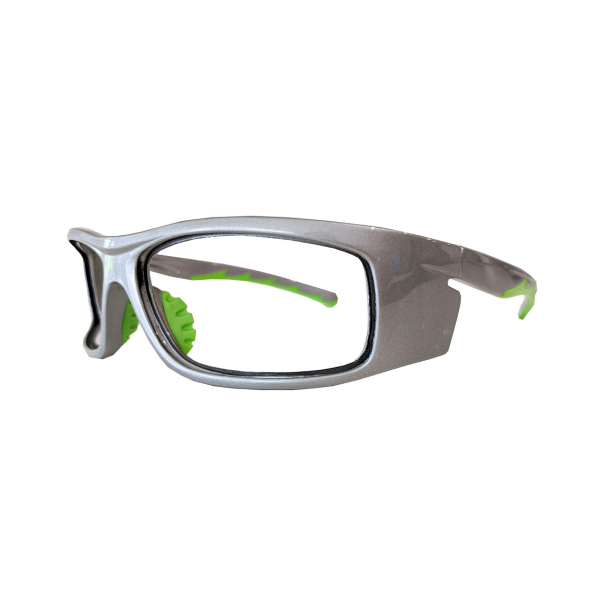
- Extended side shields for additional protection
- Rubberized and adjustable nose pads for grip and comfort
Specifications:
- Bridge: 17mm
- Temple: 140mm
- Lens Width: 55mm
- Weight: 88g
Why Wear Protective Lenses?
In a series of tests, optically ground prescription lenses of glass, leaded glass, and plastic were exposed to radiations that simulated routine angiography. Radiations transmitted through the lenses were measured. Results showed that plastic provided no protection, regular glass provided moderate protection and high lead content glass reduced radiation transmission by approximately 70%. The leaded glass that Imaging Solutions uses blocks 97% and up to 150kp.
Relatively high doses of radiation can damage the conjunctiva, iris, sciera and blood vessels of the retina. The lens of the eye, however, is the critical site, for it may sustain irreversible damage from a relatively low dose of radiation. Low doses will produce only a temporary reaction in the other ocular structures.
The sensitivity of the lens to radiation is felt to be due to the failure of normal cell replacement. The lens is surrounded by a capsule. On the anterior surface beneath this capsule is a layer of attended or cubold cells which comprise the epithellum of the lens and allow for normal metabolism of the lens. At the peripheral border or equator of the lens, these cells become progressively elongated and are transformed into the structure of the lens proper.
Von Sallman demonstrated that cytologic damage from radiation to the lens consists of a temporary cessation of mitosis, cell death, and occasional abnormal mitosis produce bizarre cells. Because of the enveloping capsule of the lens, these damaged or bizarre cells can’t be sloughed but instead are pushed or migrate to the posterior pole of the lens’ where early radiation-induced cataract is first clinically manifest. Subsequent changes may also be observed in the anterior pole, with progressive opacification of the cortex eventually forming a mature and non-specific cataract.
Until now the only protective devices have been heavy cumbersome lead goggles. These are generally not used because of inconvenience and discomfort. Commercially available prescription lenses for ordinary glasses are made of either plastic or glass and therefore offer no or inadequate protection. There are two basic types of glass lenses, and these differ significantly in lead content. Ordinary glass lenses called “crown glass” are used by most people.
A less common glass, known to opticians as “hi-lite”, happens to have relatively high lead content which allows for a thinner lens than would otherwise be required. It is normally used as a substitute for extremely thick lenses.
The below experiment was designed to determine if significant protection from radiation is provided by wearing high lead content glass instead of ordinary glass or plastic lenses.
“An age-related cataract, the thing we think about conventionally, is in the front of the lens,” explains Dr Ziv Haskal, Professor of Radiology and Director of Vascular and Interventional Radiology, New York Presbyterian Hospital-Columbia University New York. These happen in the back of the lens, a completely different area. Radiation is not the only thing that causes this, people can have PSC cataracts from diabetes, from steroids etc., which is why it is important to look for these co-factors and the need for a large enough population to eliminate these.”
Reviews
There are no reviews yet.